Smokefree Hub offers local & nationwide delivery for nicotine pouch orders.
Same-day delivery is available in Metro Manila & selected greater Manila areas,
while provincial orders are shipped through our courier partners. Delivery rates
vary depending on your location and order size.
when headlines broke that the u.s. food and drug administration (fda) authorized several zyn nicotine pouch products with a specific modified-risk claim, most of the internet seemed to ask the same question:
“did zyn just win?”
ZYN nicotine pouch production at Swedish Match’s Silkeborg facility.
Image: Swedish Match, 2020.
well… yes.
but that’s also like saying the olympics are just about the medals.
the real story wasn’t the headline. it was everything that happened
before it.
after years of reviewing scientific evidence covering product chemistry, manufacturing processes, toxicology, behavioral studies, and population-level public health impacts, the fda authorized certain zyn
nicotine pouch products to be marketed with the following modified-risk
claim:
using zyn instead of cigarettes puts you at a lower risk of mouth cancer, heart disease, lung cancer, stroke, emphysema, and chronic bronchitis.
that’s a significant statement, but it’s also one that deserves context.
the claim applies only to the specific zyn products covered by the
fda’s modified-risk granted orders. it does not apply to every
nicotine pouch on the market, nor does it mean nicotine pouches are
risk-free or approved smoking cessation products.
what it does signal is something much bigger.
regulators are no longer looking only at what’s inside the can—they’re
looking at how that can was made, how consistently it’s manufactured,
how ingredients are controlled, how the science holds up, and whether
the evidence supports the claims being made.
that’s the part many people missed.
today, manufacturers hoping to compete internationally aren’t just
thinking about new flavors or stronger nicotine strengths. they’re
investing in better manufacturing systems, stronger quality assurance,
improved traceability, ingredient transparency, laboratory testing, and
scientific documentation.
in other words, the category is growing up.
from niche product to global conversation
nicotine pouches didn’t become popular overnight.
the format first appeared in the early 2000s but remained relatively
unknown outside scandinavia for years. interest accelerated after
swedish match introduced zyn to the u.s. market in 2016, bringing
nicotine pouches to a much wider audience.
then something unexpected happened.
athletes started using them.
as nicotine pouches became increasingly visible among professional
athletes, the category began appearing in conversations well beyond its
scandinavian origins.
footballers, hockey players, golfers, and other professional athletes
were increasingly associated with the format.
that visibility pushed nicotine pouches further into mainstream
conversation.
research from loughborough university and the professional footballers’
association found that around one in five professional footballers
surveyed used snus, nicotine pouches, or both, showing just how visible
these products had become within professional football.
it’s worth remembering that popularity isn’t scientific evidence.
professional athletes also wear questionable outfits from time to time.
visibility doesn’t automatically equal recommendation.
what it does show is how quickly nicotine pouches have evolved from a
niche scandinavian product into a global category that’s impossible to
ignore.
then there’s sweden
Nicotine Pouch store in central Stockholm, Sweden.
Image: Swedish Match.
if one country continues to shape conversations around nicotine, it’s
sweden.
a recent bloomberg feature explored why sweden now has one of the lowest
cigarette smoking rates in europe. researchers generally point to a
combination of public health policies, taxation, cultural changes, and
the long-standing availability of smoke-free oral nicotine products such
as snus.
today, sweden is frequently cited as one of the first countries
approaching the commonly referenced “smoke-free” benchmark of fewer than
five percent daily cigarette smokers.
that doesn’t mean nicotine disappeared.
instead, many adults shifted toward alternative nicotine products.
data from the public health agency of sweden shows just how visible
that shift has become among younger adults. in 2024, 15% of swedish
women aged 16-29 reported using nicotine pouches daily. across the
same 16-29 age group, daily smoking stood at 2%.
that shift has naturally sparked debate
researchers have noted that nicotine pouches are often promoted through
lifestyle-focused social media content, with creators, sometimes
nicknamed “zynfluencers” showcasing the products as part of everyday
life. because regulations differ from country to country, the way these
products are marketed also varies considerably.
there’s another important distinction that often gets lost online.
tobacco-free doesn’t mean risk-free.
most nicotine pouches don’t contain tobacco leaf, but the nicotine
itself is usually derived from tobacco. describing a product as
tobacco-free refers to its composition, not its level of risk.
research into nicotine pouches continues to grow, and health authorities
consistently emphasize that more long-term evidence is still needed.
the part most people missed
while consumers debated one fda announcement, manufacturers were paying
attention to something much bigger.
for manufacturers looking at highly regulated markets, the bar is
getting higher.
companies hoping to compete in highly regulated markets increasingly
need to demonstrate far more than product performance. they also need to
prove how products are manufactured, how ingredients are sourced and
controlled, how batches remain consistent, and how quality systems are
maintained over time.
that has encouraged greater investment across the industry in:
whether a product is ultimately reviewed by the fda or another
regulator, one thing is becoming increasingly clear:
scientific evidence and manufacturing quality matter more than ever.
what does this mean for the philippines?
the nicotine pouch category is still relatively new in the philippines,
but the regulatory landscape continues to evolve.
products are currently regulated under republic act no. 11900,
together with its implementing rules and regulations. these establish
requirements covering packaging, health warnings, age restrictions, and
the sale of regulated nicotine products.
as more international manufacturers enter regulated markets,
expectations around manufacturing quality and documentation continue to
rise.
higher standards can mean greater consistency, better documentation, and
stronger accountability throughout the supply chain.
they can also make it easier to distinguish products that comply with
evolving regulatory requirements from those relying primarily on
marketing claims.
at the same time, responsible regulation remains essential.
age verification, restrictions on youth access, accurate product
information, and continued scientific research all play an important
role in ensuring the category develops responsibly.
the biggest win wasn’t just for zyn
the fda’s decision may have made headlines because of one brand.
but the longer-term impact reaches far beyond a single product.
it signals that nicotine pouches are entering a new phase, one where
manufacturers are increasingly expected to support their products with
evidence, transparent manufacturing practices, and internationally
recognized quality standards.
that changes the expectations across the category.
and as regulations continue to evolve, adult consumers have clearer ways
to distinguish products that meet applicable regulatory requirements
from those that do not.
the conversation, however, is only beginning.
regulators also have stronger tools to enforce compliance.
around the world, including in the philippines, we’ve begun to see
authorities take a more active role in ensuring that regulated nicotine
products are imported, marketed, and sold according to the law. as
enforcement becomes more consistent, businesses that fail to meet these
requirements may face penalties, product seizures, suspension of
operations, or removal from online marketplaces, while compliant
retailers are better positioned to continue serving adult consumers.
for adult nicotine users, this also makes understanding where products
come from increasingly relevant. documented supply chains, regulatory
compliance, and responsible retail practices are becoming a larger part
of how the category is regulated and understood.
because the biggest question is no longer whether nicotine pouches are
growing.
it’s how responsibly the category chooses to grow from here.
important notice: this article is intended for adults of legal age to purchase nicotine products in the philippines. nicotine products contain nicotine, which is an addictive substance. this content is provided for informational and educational purposes only and does not constitute medical advice.
Image note: Unless otherwise indicated, editorial illustrations on this page are AI-generated concept visualizations created for educational and illustrative purposes. They are not photographs of actual retail locations, products, or individuals.
add_action('wp_footer', function () {
if ( ! is_shop() && ! is_product_category() && ! is_front_page() ) return;
?>
You can`t add more product in compare
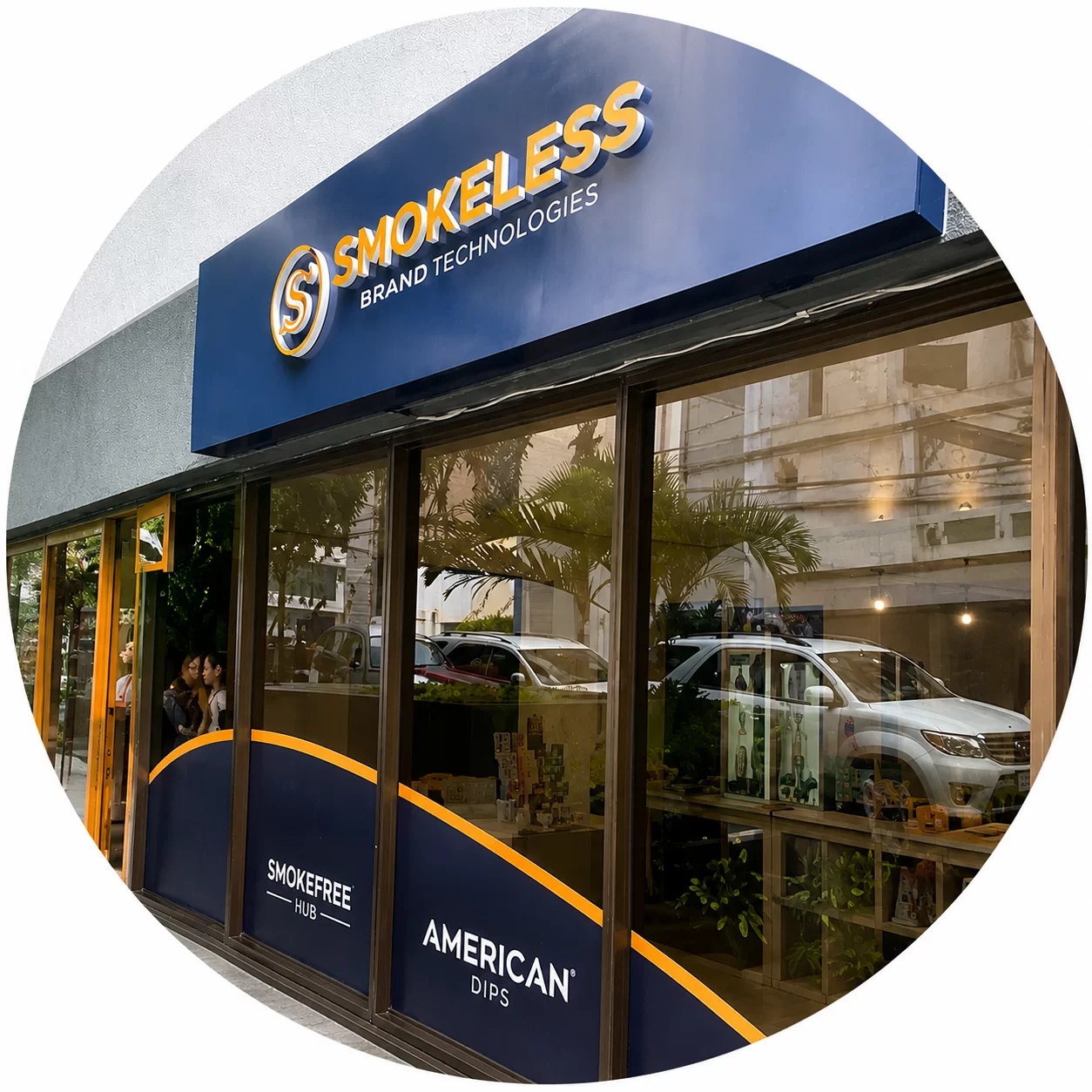
two stores. one mission
smokeless philippines and smokefree hub are part of the same retail network, created to better serve adult nicotine consumers.
smokeless philippines focuses on traditional nicotine formats including vapes, american dips & tobacco products.
while smokefree hub is our dedicated destination for nicotine pouches with brands you recognize.
Our mission hasn't changed: to provide Filipino adults with access to new nicotine formats and the freedom to choose what works best for them, because the future is pouches.
continue to smokefree.ph
Let’s make sure you’re of age
This website is for adults (18+) in the Philippines who currently use nicotine products.
These smoke-free products contain nicotine, are addictive, are not risk-free, and are not smoking cessation products.
By entering, you confirm you are at least 18 years old.
Operated by Smokefree Solutions Inc. with products and content from partner organizations, including Smokeless Philippines and Global Pouch Distribution Inc.
 Nationwide